


Energy Healing for Autistic Children: A Guide
Table of Contents
- Understanding Energy Healing for Autistic Children
- How Sensory Regulation Techniques for Children Support Nervous System Balance
- Using Crystals for Calming Energy and Emotional Stability
- Essential Oils for Sensory Support and Daily Grounding
- Energetic Grounding Practices for Kids at Home
- Preparing Your Child for Their First Energy Healing Session
- Creating a Calming Energetic Environment
- Frequently Asked Questions
Last Updated: September 18, 2026
Understanding Energy Healing for Autistic Children
Energy healing for autistic children offers a gentle, non-invasive approach to supporting nervous system balance and emotional regulation, complementing traditional therapies as part of a child's wellness journey.

Autistic children often experience the world with greater sensory intensity, which can lead to overwhelm and anxiety (Sensory Processing Differences in Individuals With Autism Spectrum Disorder). Energy healing practices work with the body's natural energy systems to promote calm, safety, and grounding.
Energy healing for autistic children is flexible and can be tailored to each child's unique sensory needs through crystals, essential oils, or grounding techniques.
Energy work is not a replacement for medical care or therapy. Instead, it complements traditional support by offering additional pathways to relaxation and emotional balance. Many families find that combining approaches creates the most supportive environment for their child's growth. Integrating these gentle practices alongside structured personalized ABA therapy helps ensure that a child receives both the calming benefits of energy work and the skill-building focus of clinical intervention.
How Sensory Regulation Techniques for Children Support Nervous System Balance
Sensory regulation techniques help the nervous system shift from activation to calm, allowing the body to relax and improve how children process the world.
The nervous system has two branches: sympathetic (activation) and parasympathetic (calming). Autistic children often spend more time in sympathetic activation due to sensory overwhelm, and regulation techniques gently guide the system back toward balance.
Simple grounding practices activate the parasympathetic response:
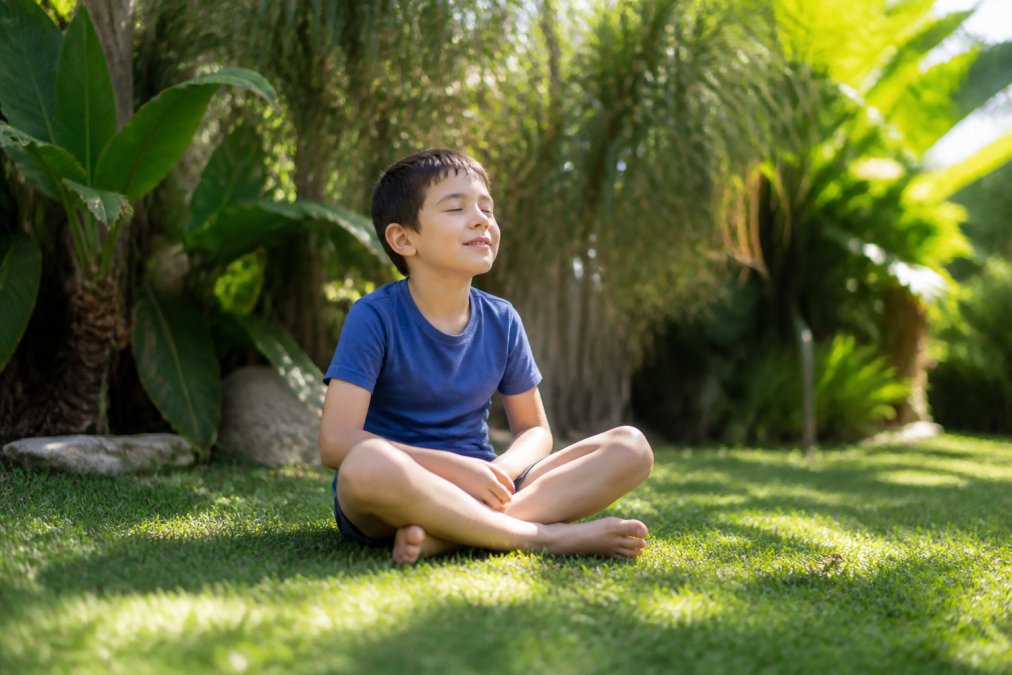
- Barefoot contact with earth calms the nervous system through direct connection
- Slow, intentional breathing signals safety to the body
- Gentle touch or pressure provides sensory input that feels organizing
- Repetitive, rhythmic movements soothe and center the nervous system
- Cool or warm textures offer sensory anchoring without overstimulation
These techniques work best when introduced gradually with the child's consent. Forcing any practice creates activation rather than calm; respecting boundaries builds trust and allows natural relaxation.
Using Crystals for Calming Energy and Emotional Stability
Crystals carry vibrational frequencies believed to support emotional and energetic balance, serving as both sensory tools and anchors for calm, though safety and sensory respect must guide their use.
Understanding Crystal Properties
Clear quartz supports focus and clarity; amethyst promotes peaceful rest; red jasper provides grounding and safety. These work best when placed in the child's space or held during stress.

The sensory experience of crystals matters as much as their energetic properties. Smooth stones feel pleasant to hold, and their weight and coolness provide grounding input.
Safe Crystal Use for Children
Not all crystals are appropriate for all children. Age, sensory profile, and developmental stage determine safe use:
- For children under 3 years old: Avoid small crystals entirely due to choking hazard. Use only large, polished stones (at least 2 inches) that cannot fit in a mouth, and supervise all contact.
- For children with oral sensory seeking: If your child mouths objects, avoid crystals they can ingest. Some crystals contain toxic minerals (like malachite, which contains copper). Stick to large, supervised pieces or skip handheld crystals altogether.
- For children with tactile defensiveness: Not all children enjoy holding stones. Forcing a crystal into a child's hand creates dysregulation, not calm. If your child resists, respect that boundary. Placing crystals in the room (out of reach) offers energetic support without forcing contact.
- For children with visual sensitivities: Shiny or reflective crystals can be overstimulating. Some children prefer matte, natural stones; others love sparkle. Observe your child's response and adjust.
Using Crystals Safely at Home
Using crystals for calming energy involves simple, boundary-respecting practices:
- Place crystals in the child's bedroom (out of reach if they mouth objects) to create a peaceful energetic environment
- Offer a crystal during quiet time only if your child enjoys holding it; never force contact
- Create a crystal grid in a safe corner where the child can retreat when overwhelmed, place it high enough that small children cannot access it
- Combine crystals with essential oils for layered sensory and energetic support, but only if your child enjoys both
- Rotate crystals to prevent boredom and keep the sensory experience fresh
Respecting Sensory Boundaries
The most important principle is consent. Your child's body belongs to them. If they don't want to hold a crystal, that preference is valid and should be honored. Forcing any practice creates the opposite effect, activation and distrust rather than calm.
When Crystals Are Not Appropriate
Energy work with crystals may not be the right fit if:
- Your child has a strong oral sensory-seeking pattern and cannot safely be supervised with small objects
- Your child has significant tactile defensiveness and becomes dysregulated by touch or holding objects
- Your child has a history of swallowing non-food items (pica)
- Your child's anxiety increases when given choices or sensory options (some children do better with fewer, not more, tools)
In these cases, other grounding practices, barefoot time on earth, breathing work, or environmental adjustments, may serve your child better.
Essential Oils for Sensory Support and Daily Grounding
Essential oils offer powerful sensory support for autistic children. The olfactory system connects directly to the brain's emotional centers, making scent a potent tool for regulation and grounding (Olfactory memory networks: from emotional learning to social behaviors).
- Lavender promotes relaxation and restful sleep
- Frankincense grounds the nervous system and supports emotional calm
- Vetiver anchors scattered energy and provides stability
- Palmarosa and hinoki create a sense of peace and safety
Energetic Grounding Practices for Kids at Home
Grounding practices anchor a child's energy and nervous system, creating feelings of safety and stability.

Preparing Your Child for Their First Energy Healing Session
Preparation makes the difference between a healing experience and a stressful one. Autistic children benefit from clear expectations, gradual introduction to new experiences, and the assurance that their autonomy and sensory boundaries will be respected throughout.
Understanding Your Own Expectations
Communicating with Your Child
- "A healer will help your body feel calm and safe"
- "You'll be lying down in a quiet, peaceful room"
- "The healer might place their hands near you, or use crystals or oils"
- "You can say stop anytime, and we'll pause right away"
- "There's no pain, it feels gentle and relaxing"
- "Your body is perfect as it is. This is just extra support if you want it"
Setting Sensory Boundaries Before the Session
- Touch preferences: Does your child prefer no hands-on contact, light touch, or deeper pressure? Some children find any touch dysregulating; others find it grounding. Honor your child's preference without judgment.
- Sound environment: Does your child need silence, or does soft background music help them relax? Are there sounds (like singing bowls or chimes) that feel soothing versus startling?
- Scent sensitivity: Many autistic children are scent-sensitive. Ask whether the healer uses essential oils, and if so, which ones. Your child may need a scent-free session, or they may love a particular aroma. Discuss this openly.
- Lighting: Bright or flickering lights can be dysregulating. Does your child need dimmed lighting or soft, steady illumination?
- Duration: Start with 15 to 20 minutes rather than a full hour. This allows your child to experience the benefits without becoming overstimulated. Sessions can be extended as comfort grows.
- Communication during the session: Establish a clear signal your child can use if they need a break, a raised hand, a word, or a gesture. A skilled healer will pause immediately when this signal appears.
Visiting the Space Beforehand
Managing Your Own Anxiety
Creating a Calming Energetic Environment
Your home is your child's primary healing space. Creating an environment that supports calm and grounding benefits your entire family.
Frequently Asked Questions
How can energy healing help with sensory regulation in children with autism?
Energy healing works by supporting the nervous system's ability to process sensory information more smoothly. When a child's nervous system is calm and balanced, they experience less sensory overwhelm from sounds, lights, textures, and other stimuli. Techniques like grounding, crystal work, and calming essential oils help the body shift into a relaxed state, making it easier for autistic children to manage their sensory environment and respond with greater ease throughout the day.
What are the best crystals for supporting an autistic child's calm energy?
Clear quartz amplifies peaceful intentions and clarity, while amethyst promotes restful, gentle energy. Blue lace agate supports calm communication. These crystals work best when placed in a child's room, carried in a pocket, or held during quiet moments. Always supervise young children with crystals to ensure safety, and choose tumbled stones rather than raw pieces with sharp edges.
Can essential oils really support sensory regulation for autistic children?
Yes. Therapeutic-grade essential oils like lavender, frankincense, and vetiver can support the body's relaxation response. When applied to pulse points, they help calm an overactive nervous system and reduce anxiety. The I Am Peaceful and I Am Rested elixirs, for example, blend oils specifically chosen to promote tranquility. Always use oils safely with children, avoid ingestion, and consult a healthcare provider if your child has sensitivities.
What should I do to prepare my child before their first energy healing session?
Create a calm, positive expectation by explaining that energy work helps their body feel peaceful and safe. Let them choose what to wear and whether they'd like a favorite stuffed animal or blanket nearby. Arrive a few minutes early so they can settle into the space. During the session, they can rest, sit quietly, or even move gently, there's no 'right' way. Afterward, offer grounding activities like a snack or quiet time to help them integrate the experience.


Leave a comment